
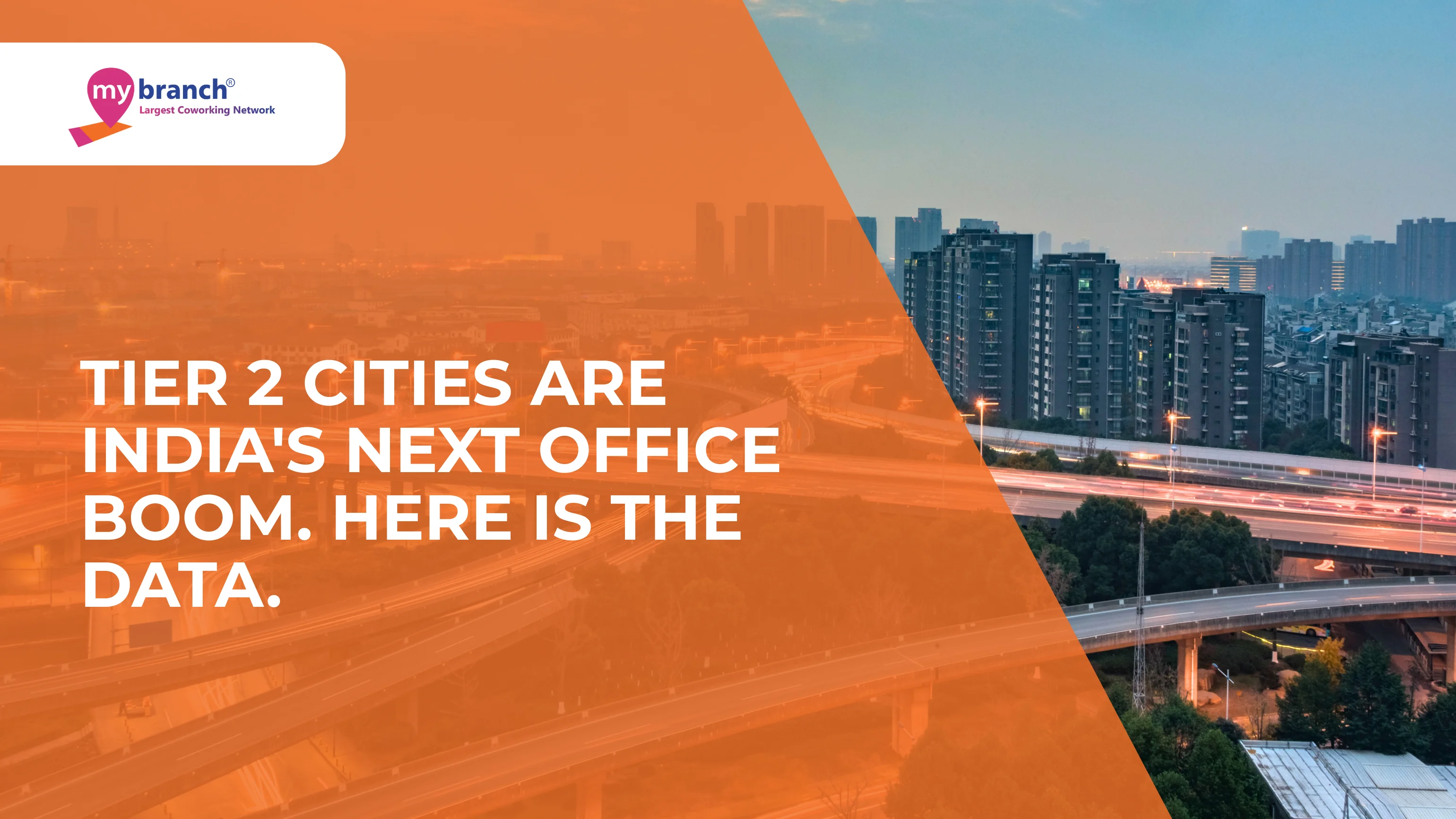
For years, the Indian office market conversation started and ended with the same six cities. Bengaluru, Hyderabad, Mumbai, Pune, Delhi, Chennai. Everything else was considered secondary. That framing is now outdated, and the numbers make it impossible to ignore.
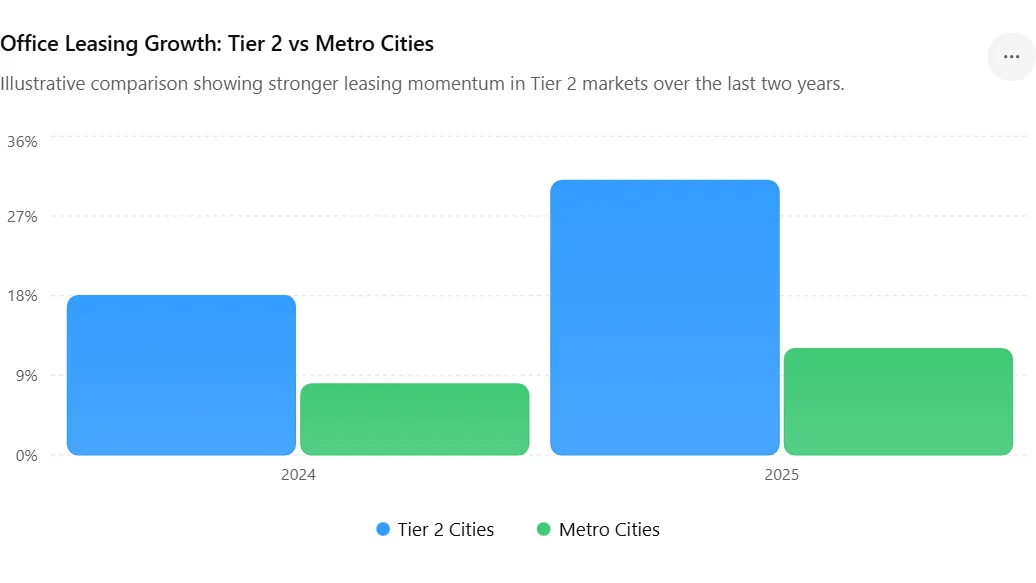
India's office leasing hit a record 86.4 million square feet in 2025, according to Knight Frank India. What is less reported is where the growth is coming from next. Tier 2 cities are emerging as a structural growth engine for the office real estate market, with leasing activity nearly doubling year on year in FY25. This is not a temporary spike driven by pandemic-era remote work experiments. It is a structural shift in how Indian businesses think about where work gets done.
The Numbers That Tell the Story
A joint survey by JLL and Awfis found that nearly half of office occupiers with operations in Tier 2 cities now prefer flexible workspaces, while a CBRE study showed that demand for Grade A offices has risen by over 20 percent in smaller cities in just two years.
More than 10 lakh square feet of office space has been leased in Coimbatore alone over the past few years. Key deals include Bosch Global Software Technologies leasing 3.25 lakh square feet and State Street Corporate Services taking 2.1 lakh square feet valued at Rs 126.24 crores. Major firms like Infosys, Deloitte, Amazon, and Accenture have also expanded their footprint in these smaller markets.
These are not SMEs testing the waters. These are enterprise firms making deliberate, large-scale bets on Tier 2 cities as operational bases.
GCCs, which account for more than 40 percent of nationwide gross leasing, are also expanding selectively into cities such as Coimbatore, Kochi, Vizag, and Jaipur. When GCCs start moving into Tier 2 cities, the infrastructure, talent ecosystem, and commercial real estate quality that follow tend to accelerate the entire market.
Why This Is Happening Now
Infrastructure upgrades, rising rentals in metros, and shifting workforce preferences are driving companies to look beyond top-tier markets. Occupiers are strategically diversifying their footprints as Tier 2 hubs emerge as large talent bases, supported by improving connectivity and relatively lower cost of living.
Office rentals in metro cities like Mumbai or Bengaluru can be five to six times higher than in smaller cities. For businesses looking to scale or open satellite branches, this difference can translate into significant savings.
But the cost alone does not explain the shift. The talent argument is just as compelling. Engineering colleges, management institutions, and technical training pipelines in Tier 2 cities have been producing capable graduates for years. What has changed is that businesses are now willing to build serious operations around that talent rather than insisting on metro addresses for functions that do not need them.
Which Cities Are Moving Fastest
The Tier 2 office boom is not happening uniformly. The cities pulling ahead share a common set of characteristics: an established industrial or services base, improving air and road connectivity, a growing pool of technical and management talent, and a commercial real estate market that has matured enough to support Grade A office infrastructure.
Coimbatore, Jaipur, Nagpur, Vijayawada, Kochi, and Indore are among the cities seeing the most consistent leasing activity. Each sit within a commercially active regional corridor. Each offers a combination of cost advantage and operational credibility that metro-only strategies cannot match.
What This Means for Businesses That Have Not Moved Yet
The businesses that expanded into Bengaluru in 2005 did not do it because it was already obvious. They did it because they read the signals early and moved before the market got crowded. The same logic applies to Tier 2 cities in 2026.
The data is already pointing in one direction. Leasing is doubling. Enterprise firms are committing large footprints. The infrastructure is improving. Talent pipelines are deepening. The window to enter these markets before competition for space, talent, and distributor relationships intensifies is open now, but it will not stay open indefinitely.
For businesses that want to act on this without overcommitting to a market they are still learning, managed office space through a network like MyBranch, India's largest coworking network with presence across 75 plus cities, is the format that makes Tier 2 expansion executable without the capital risk of a conventional lease in a market that is still developing.
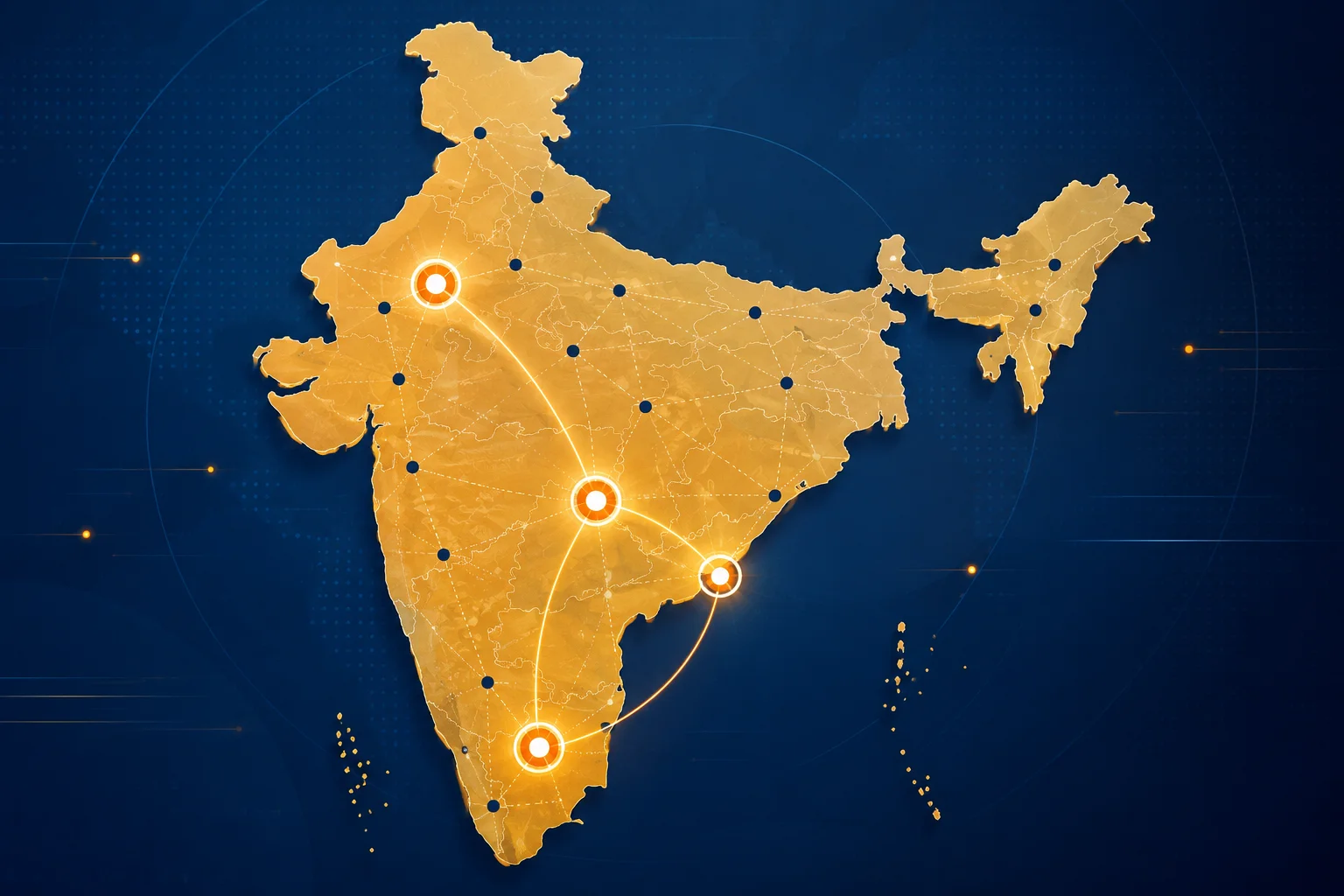
The metros are not going anywhere. But the next decade of Indian office growth is not going to be written in Bengaluru and Mumbai alone. It is going to be written in the cities that most businesses are still filing under "maybe later."
Also worth reading: Managed Office vs Conventional Lease in Pune: A Real Cost Breakdown for 2026 https://www.mybranch.co.in/blogs/managed-office-vs-conventional-lease-in-pune-a-real-cost-breakdown-for-2026
Frequently Asked Questions
Which Tier 2 cities in India are seeing the highest office space demand in 2026? +
Coimbatore, Jaipur, Nagpur, Vijayawada, Kochi, and Indore are among the most active Tier 2 office markets in India in 2026, driven by enterprise leasing, GCC expansion, and growing talent pipelines.
How much cheaper is office space in Tier 2 cities compared to metros? +
Office rentals in Tier 2 cities can be five to six times lower than in metros like Mumbai or Bengaluru, making them significantly more cost-effective for satellite offices and operational teams.
Are large companies actually expanding into Tier 2 cities? +
Yes. Bosch, State Street, Infosys, Deloitte, Amazon, and Accenture have all made significant office commitments in Tier 2 Indian cities. GCCs alone account for over 40 percent of nationwide office leasing and are expanding into cities like Coimbatore, Kochi, and Jaipur.
What type of office setup works best for entering Tier 2 city for the first time? +
Managed and flexible offices are the preferred format for first-time Tier 2 entry. They offer immediate setup, compliance-ready addresses, and flexible seat counts without the capital commitment of a conventional lease in a market that is still developing.
Is India's Tier 2 office boom a temporary trend or a structural shift? +
The data points to a structural shift. Office leasing in Tier 2 cities nearly doubled year on year in FY25, driven by rising metro costs, improving infrastructure, talent availability, and deliberate decentralization strategies by enterprise occupiers.